Gaudí, the exhibition at Museu Nacional d’Art de Catalunya until March 6, 2022
Curator: Juan José Lahuerta
Antoni Gaudí (1852-1926) is undoubtedly the most popular and internationally renowned Catalan architect.
Can we rethink the image that we have of him today? You will find the answer in this exhibition, which offers a new look at the architect and an exercise in deconstructing the man, the myth and his work, which are so often reduced and simplified to the point of turning them into a brand.
Josep Costa (Picarol). L’Esquella de la Torratxa. Barcelona Futura, 04/01/1912. Museu Nacional d’Art de Catalunya – Library Joaquim Folch i Torres
Antoni Gaudí was a complex character who carried out his work with very specific political, ideological and aesthetic strategies in mind.
Gaudí was not a mystic absent from the world
Twenty years after the celebration of the Gaudí Year, the Museu Nacional presents an exhibition that steers clear of clichés and covers the architect’s entire career.
In a museographic approach grounded in theatricality and the accumulation of objects, as if it were Gaudí’s workshop, more than 650 items are displayed, including architectural and design objects, furniture, documentation, floor plans and photographs from around one hundred national and international collections, including the Museum collection, which holds an important set of works by the architect.
Furniture of the distributor of the main floor of the Casa Milà disassembled in the 1960s. FERRAN NADEU
The exhibition, which can be seen at the Musée d’Orsay in Paris from 14 March to 17 July 2022, shows that Antoni Gaudí did not work in isolation from the world and places it in the international context of the time with works by Geoffroy-Dechaume, Thomas Jeckyll, William Morris, Auguste Rodin and Eugène Viollet-le-Duc.
Gaudi’s Casa Vicens, from private housing to UNESCO heritage. It’s the first masterpiece of Antoni Gaudí and sowed the seeds of later works.
The first house designed by the iconic architect – exuberant Casa Vicens in the beleaguered city’s Gràcia district – opens to the public later this month. Built between 1883 and 1885 as a summer house for the Vicens family, here he showcased his unparalleled talent. Declared Unesco World Heritage in 2005.
Brand Barcelona’s comeback begins with a contribution from its heaviest hitter: Antoni Gaudí. Almost a century after his death, the architect of La Sagrada Familia is still synonymous with the city. On 16 November, Gaudí’s first house, Casa Vicens, will open permanently to the public for the first time.
The house in Barcelona’s Gràcia district was commissioned by and named after Manuel Vicens i Montaner, owner of a brick factory. Vicens was perhaps persuaded to gamble on the then-unknown 31-year-old architect by the head of Barcelona’s Architecture School, who famously said upon Gaudí’s graduation: “We have given this degree to either a fool or a genius. Time will tell.”
Vicens’s audacity resulted in what many consider to be the first major work of the Catalan modernisme movement.
Casa Vicens Awarded Unesco status in 2005.
Once surrounded by fields and smallholdings, the house now looks even more striking hemmed in by blocks of prosaic flats. Like much of the architect’s work, it is a glorious gallimaufry of styles, combining Japanese, Moorish-revival and original elements into an improbable success. Gullies of colourful bricks dribble from the eaves like a Lego model of a half-iced cake; viciously spiked wrought-iron gates are framed by green tiles in a marigolds design; leaf patterns on interior walls could be reflections of the garden or an allegory of the journey of Christ. Nothing is as it seems.
A local family bought Casa Vicens from Manuel’s widow in 1899. They lived there for three generations before putting it up for sale in 2007. In 2014, Andorran financial institution MoraBanc bought it. Its meticulous three-year restoration by JOSÉ ANTONIO MARTÍNEZ LAPEÑA & ELÍAS TORRES Architects has separated the exuberant original interiors from those of a 1924 extension, which is now all in plain white for maximum contrast.
The basement will house a gift shop, while on the top floor; where little of architectural value was left. There’s an exhibition of the house’s history and influences, complete with Gaudí’s original plans.
Manager Mercedes Mora says the time is right for Casa Vicens to open to the public. “Culture moves emotions,” she says. “This could be a moment of peace.” The building is, she notes, a dialogue between contrasting elements, and even between nature and architecture. “This is the essence of Gaudí’s universe – the garden of Catalan modernisme. We can see the seeds of styles and techniques that he nurtured throughout his career, and of others he used only here”. “It represents a new way of thinking.”
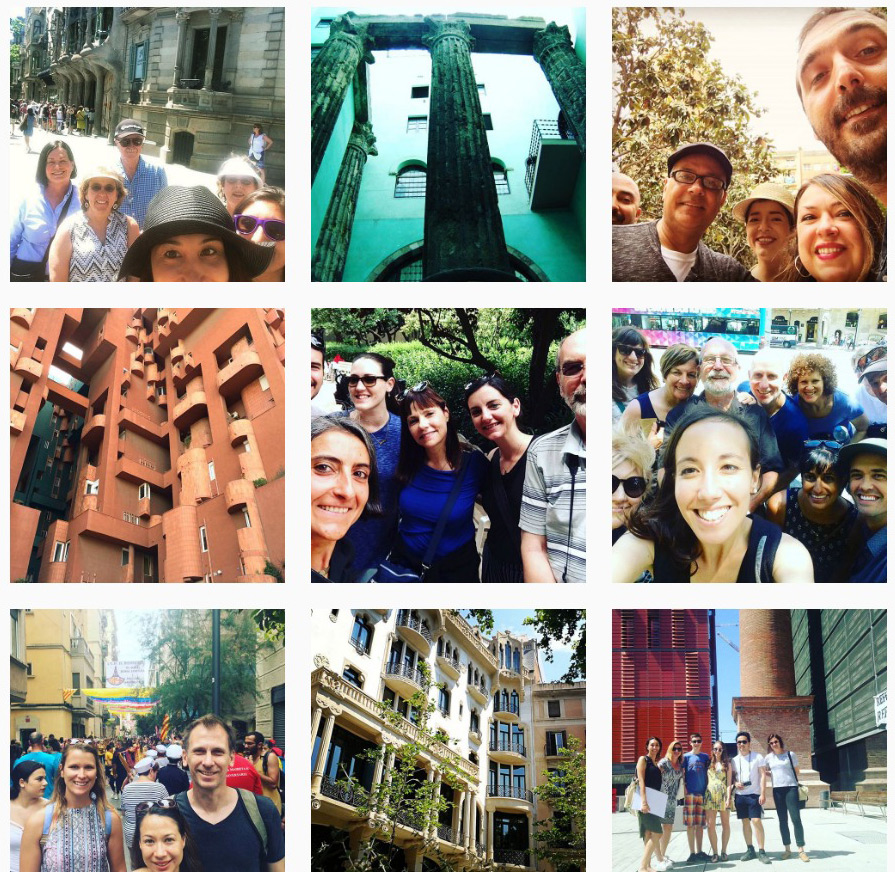
BARCELONA & GAUDI a great start to discover the genius of Gaudí. Every Tuesday, Friday and Sunday as Regular Walking tour. And Monday and Wednesday as a Private Tour.
BARCELONA & THE URBANISM travel with us to the origins of the modern Barcelona. Every Wednesday.
BARCELONA & THE FUTURE CITY walk through the smart city looking for our Future and discover with us the new Superblock at Poblenou. Every Thursday
BARCELONA & THE SEA discover Barcelona through its architecture. Every Saturday.
BARCELONA & BOFILL Walden 7 and Taller de Arquitectura expedition. An incredible travel through the most emblematic Ricardo Bofill’s masterpiece.
Only at the end of September, stay tuned for the exactly date and contact us by mail to book this special tour.
Even in August we continue to offering our tour BARCELONA & GAUDI, on Tuesdays, Fridays and some Sundays!
Whether you are visiting the city, or you live here, if you want to know and enjoy Barcelona in a different way , we have what you are looking for.
Meet the spirit of the city that dazzles many visitors and that we’re in love with.
Come and walk with us and live a refreshing experience!!!
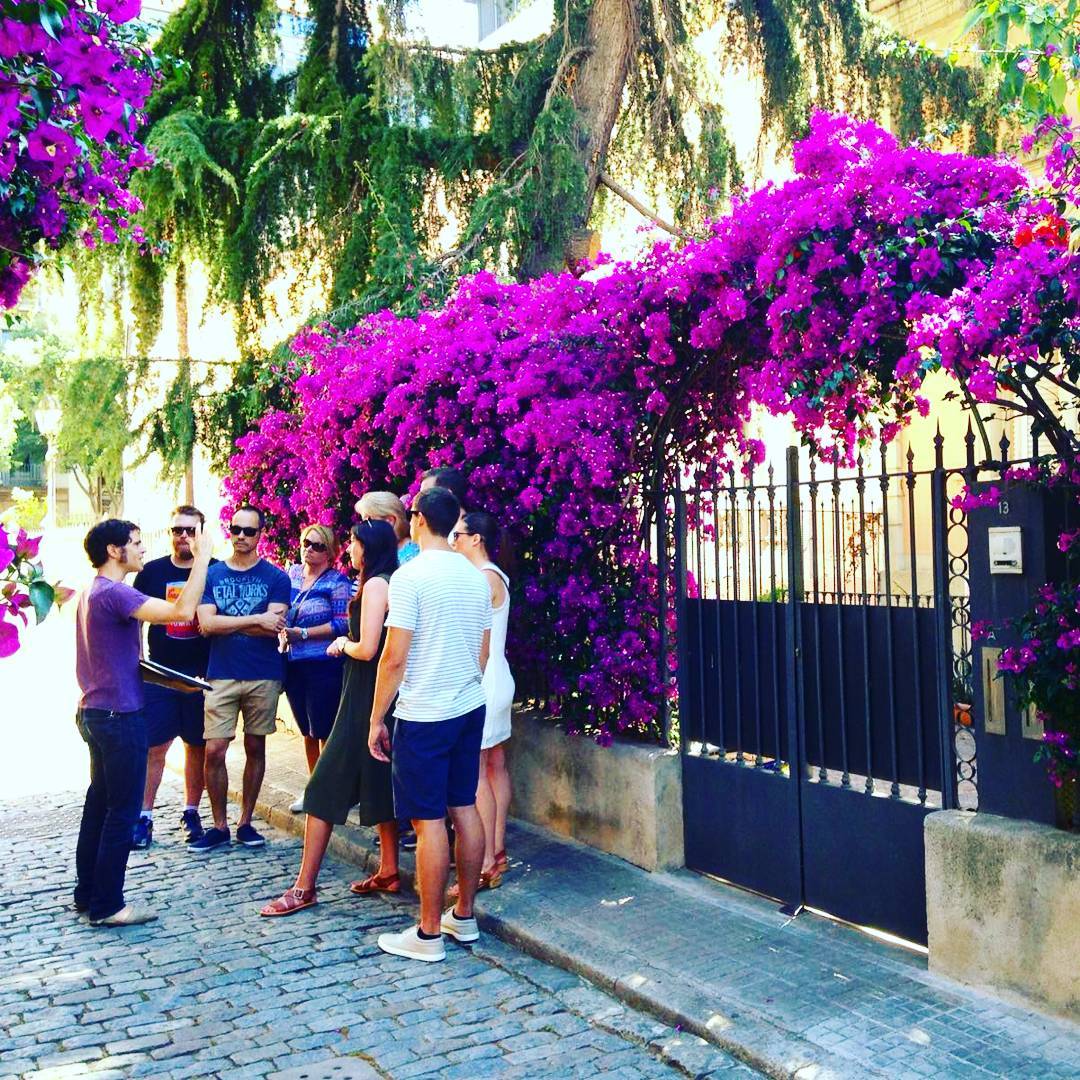
BARCELONA & GAUDI Walking Tour, something else than a typical tour…
Hi Walkers! This week we continue sharing with you our differents Walking Tours. This time Barcelona & Gaudi, a different way to discover Barcelona modernism through Gaudi’s masterpiece!
Along the Modernism Route, we will trace the sinuous dream path that took Antoni Gaudí from his social concerns to a total absorption with the divine, until he finally became “the last great cathedral builder.”
Our aim is to delve into the architectural essence of the Master and dig deep into his visual power, which is what made him an inspiration for the Surrealists and has earned him the honor of being the Best-Known Spanish Architect.
Our discussion will focus on a set of turning points that include a project in early 20th-century Manhattan, the last commission from his patron, Eusebi Güell, and his first architectural steps with the Sagrada Família.
We will talk about eclecticism and the end of modernism, the Crypt of Colony Güell and the Sagrada Família, utopian socialism, positivist materialism, the intellectual bourgeoisie, the Spanish Civil War, anarchism, beatification and deliquescent surfaces.
We will see the Antoni Tàpies Foundation and Casa Lleó Morera by Domènech i Montaner, Casa Amatller by Puig i Cadafalch, some hidden Eixample courtyards and, of course, Casa Calvet, Casa Batlló and Casa Milà by Antoni Gaudí.
And we remind you that Spring is an amazing moment to walk beside us!
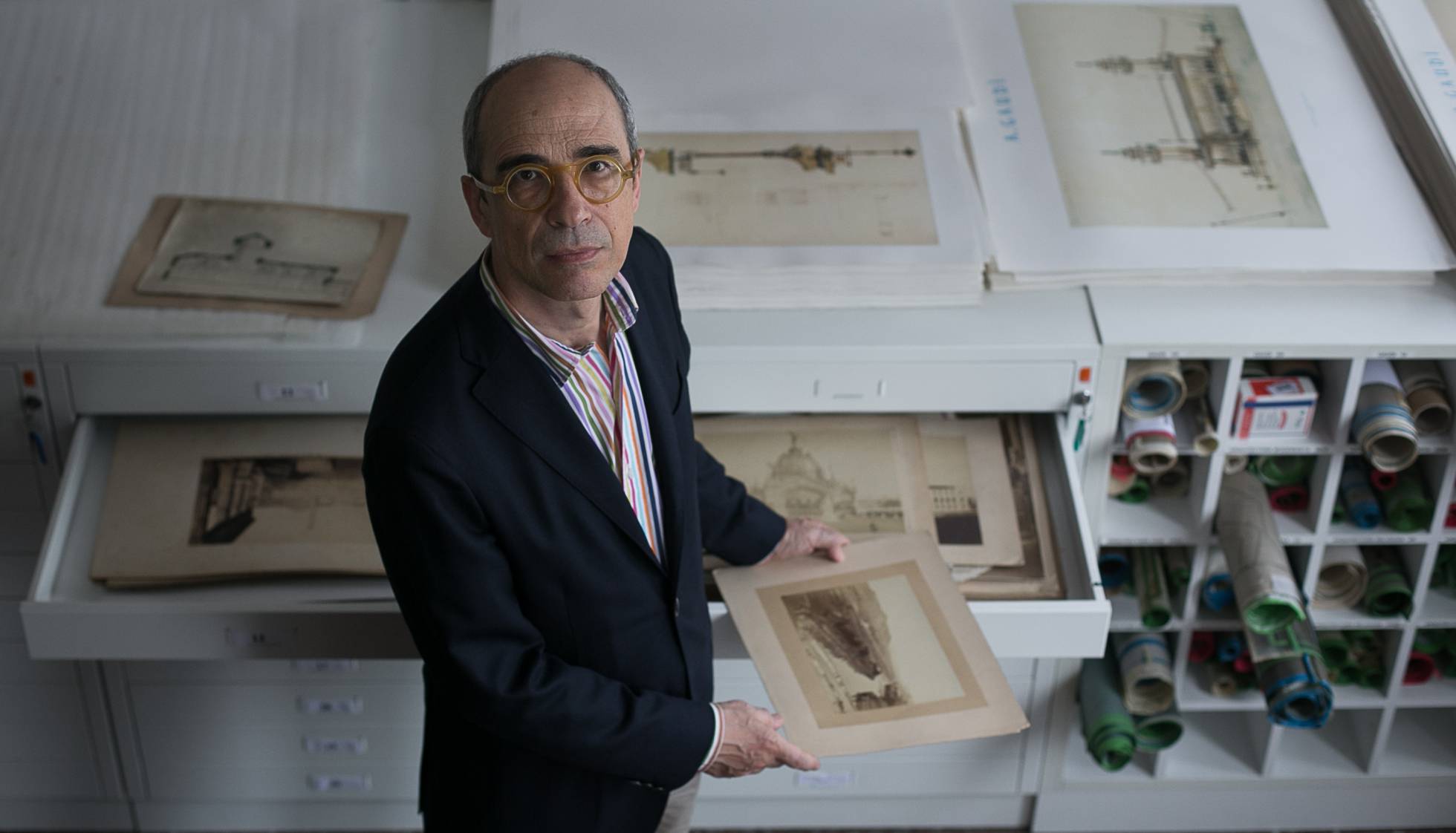
Sobre Gaudí se ha construido una costra que hay que romper.
Juan José Lahuerta en la sede de la Cátedra Gaudí de la ETSAB-UPC, en el campus de la Diagonal de Barcelona. ALBERT GARCIA
Después de tres años el arquitecto e historiador del arte Juan José Lahuerta (Barcelona, 1954) ha dejado de ser jefe de colecciones del Museo Nacional de Arte de Cataluña (MNAC) y se ha incorporado a la Escuela Técnica Superior de Arquitectura de Barcelona de la Universidad Politécnica (ETSAB). “Añoraba la tarima, los estudiantes, las clases y escribir”, explica este elegante profesor con aspecto de sabio que luce gafas retro como quevedos. El 2 de noviembre será, oficialmente, director de la Cátedra Gaudí.
En estos años Lahuerta ha dado un vuelco al MNAC, presentando el arte moderno huyendo de las explicaciones donde las vanguardias son las protagonistas y mostrando la complejidad del momento. Pese al éxito, que ha llevado a aumentar en un 15% el número de visitantes, Lahuerta cree que Barcelona no ha entendido aún que el MNAC es su museo. “Hacer una exposición con 50 picassos es fácil, si tienes dinero. Lo difícil es articular un discurso que sirva para comprender qué ha sido el arte moderno y la posición que han tenido los artistas en la sociedad y la burguesía que necesitaba símbolos donde reconocerse”. Lahuerta seguirá vinculado al MNAC como asesor externo comisariando exposiciones como Picasso románico con 40 obras del malagueño en diálogo con los ábsides románicos, en 2017 habrá nueva presentación de Renacimiento y Barroco y plantea cambios en el románico y el gótico. “Hay que ir hacia la colección del MNAC, no las colecciones del museo”.
Pero ahora se centrará en Gaudí, un viejo conocido de Lahuerta del que es un gran especialista (también de Dalí). Lo primero que quiere es integrar la cátedra, creada en 1956, en la ETSAB. “Han tenido una vida al margen”. También establecer un programa de investigación e inventariar su rico patrimonio, como las 40.000 placas fotográficas del siglo XIX y XX. Pero su proyecto va más allá de Gaudí: “Con el fondo, uno de los mejores del mundo en su especialidad, la cátedra tiene que ser un centro de estudios de la arquitectura del siglo XIX y XX, no un centro decimonónico que se pasa la vida intentando saber de qué color llevaba los calzoncillos Gaudí el día 2 de enero de 1893”.
Según Lahuerta a Gaudí le han perjudicado muchas cosas, como el que la mayoría de sus trabajos estén en manos privadas. “A Gaudí hay que rescatarlo de su propio éxito, tiene que haber un control patrimonial de sus edificios, exigir que su explotación revierta en la ciudad, algo que no ocurre. La presión que sufren edificios como La Pedrera y la Casa Batlló es tal que los lleva a desaparecer en sentido físico, porque se han hecho reformas para adaptarlos a la multitud que lo visita a diario y en el sentido profundo: son edificios de viviendas que se vaciaron para convertirlas en centros turísticos. Las reformas de los inquilinos tenían dimensiones domésticas, ahora son monumentales”.
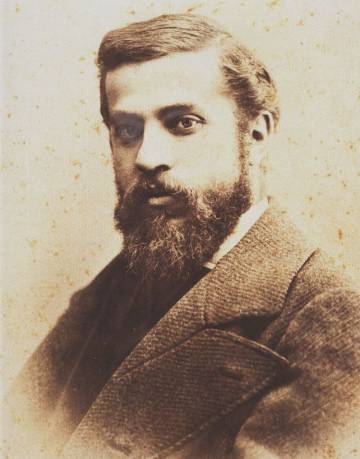
Gaudí en 1878.
El éxito actual de Gaudí radica en que “creó edificios que tienen mucho que ver con la estética de las multitudes, la de la naturaleza petrificada del mar y de las novelas de Julio Verne, y estas estéticas no han cambiado”. Y lo enfrenta a arquitectos como Le Corbusier, al que también conoce: “Un elitista frente a cuyas obras hay que preguntarse 1.000 veces que significan y acabas derrotado”. Sin embargo, Lahuerta cree que lo que perdura y vende es la cara amable de Gaudí. “Se explica que es un artista mediterráneo de formas naturales, pero en realidad fue un señor reaccionario, ultramontano, católico intransigente que trabajaba para una burguesía de Barcelona, que es la ciudad de las bombas y la violencia extrema, escenario de la lucha de clases por excelencia. De hecho, la Sagrada Familia es el templo expiatorio de la ciudad y los pecados de la ciudad son la lucha de clases”.
A Gaudí, explica, hay que estudiarlo porque guarda muchas respuestas y admirarlo, que es lo que permite que tengamos ganas de estudiarlo. No venerarlo: “No hay que venerar a nadie porque crea una ceguera que impide conocer lo que tienes delante”. También criticarlo. “Si estudias a alguien sin prejuicios ya estás criticando de entrada. El problema es que hay muchos prejuicios y a Gaudí se le ha construido una costra que hay que romper para conocerlo bien a él y su obra”.
En el tema de la Sagrada Familia es radical: “Solo es de Gaudí la fachada de la Natividad, el resto es una obra neogaudí que han hecho otros. Hay dibujos y planos que han ido sacando de aquí y de allá; indicios, pero la obra de Gaudí se transforma en su proceso y lo que han hecho, que no han diferenciado del original, es un proyecto congelado, más o menos inventado. Yo hubiese dejado las cuatro torres y la puerta gigante”.
En su último libro, Antoni Gaudí. Fuego y cenizas (Tenov) plantea un Gaudí nada artesanal ligado a la industrialización. “En sus escritos de juventud defiende las posibilidades de la industria. Gaudí no tiene nostalgia de lo medieval y cree que los artesanos ya no son capaces de hacer buenas obras. El problema es cómo se ha explotado”, y explica que la reja de la Casa Vicens está formada por una estructura metálica en red a la que se suelda una hoja de palmito repetida.
En cuanto a la expectación que genera la aparición de nuevas imágenes de Gaudí, cree que es “por fetichismo ligado a la explotación comercial, al Gaudí mercancía. Está bien ver una nueva foto suya, pero no es trascendente ni decisivo. No se busca desde el punto de vista de la investigación; se busca por el efecto”. Ocurre lo mismo con la aparición de nuevos edificios: “Como hay una necesidad de explotación y el mercado Gaudí es pequeño, hay que seguir explotándolo, habrá que seguir inventando. La investigación ha de ser bajando estratos profundos, no en fuegos artificiales que nos dicen siempre lo mismo”, remarca el investigador. “No veo ningún sentido a las cosas que han salido últimamente porque no hay una explicación científica ni un objetivo de conocimiento. Pasa como los buscadores de oro que veían pepitas donde no las había”. Lahuerta concluye diciendo que no tiene previsto colaborar desde su cátedra con la creada recientemente creada en la Universidad de Barcelona.
In May we were lucky to walk with Karla, a nice journalist from Australia.
Karla is a family travel specialist. Former Travel Insider Editor and author of two craft books, she’s travelled overland from Sydney to London with her toddler son, visiting more than 20 countries along the way. She’s also lived in four continents in the past four years.
Have a look what she wrote about us in her guide for Quantas airline!
“You can’t do Barcelona without doing Gaudi. If you’re staying in Eixample near Diagonal and Passeig de Gràcia (try Hotel Omm) you’ll be able to wave hello to two of his most popular landmarks in the city centre, Casa Milà and Casa Batlló, on your morning coffee walk (Satan’s Coffee Corner is a pleasant 20-minute walk away). To delve deeper, join Barcelona Architecture Walks for a tour with a knowledgeable architect who will tell you everything you need to know and more about Gaudi’s famous and lesser-known works across the city.
You’ll learn all about Sagrada Família but to see it up close you’ll need to go by yourself later, as it is a bit farther away from the other sights, as is Park Güell. Barcelona Architecture Walks also runs themed tours around urbanism, the port, current architectural hotspots and an intriguing tour called “Barcelona & The Future”. They ensure their walks are wheelchair accessible and children under 12 are free. You can have a private tour, but need to book ahead.”
We are very proud, thanks a lot Karla!
Come on guys come and walk with us and live a inspiring experience!!!
We are very proud about this review left by one of the last Walkers about our BARCELONA & GAUDI walking tour lead by Joan…
“Gaudi Tour for 2”
“We met up with Joan and after getting the correct pronunciation of his name right, finishing up our coffees, and getting the lowdown on what the big protest was the day before, we headed off.
That is the beauty of a small private tour. You can quiz the guide and probably get an inside view of contemporary life as well. This helps a lot when your partner is also a political tragic
The tour was terrific. Gaudi and his contemporaries influences and design philosophies were explained clearly and accessably. Now when I look at the buildings I see them not just as a building but those sometimes subtle arrangements that the architect has worked into the design.
It also gave us an understanding of the growth and expansion of Barcellona from Roman times. And the role of the borguoise in its development.
A highlight of this visit!”
Los proyectos nunca construidos de Gaudí, Gehry y Lloyd Wright.
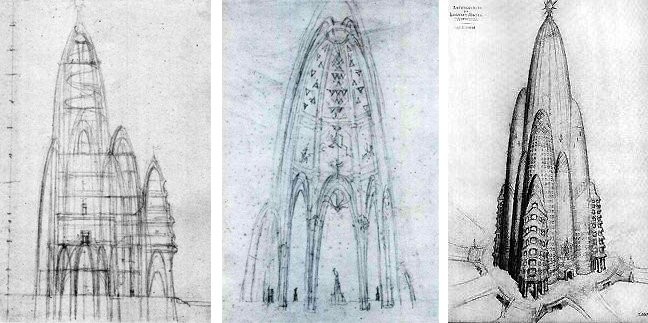
Bosquejos de Gaudí (izquierda) con el dibujo de Joan Matamala del edificio (derecha). Imagen via 6sqft
Desde su crecimiento hacia el cielo sin precedentes a fines del siglo XIX y a comienzos del siglo XX,Manhattan ha sido un ícono de la construcción alrededor del mundo, y estudios recientes afirman que la densificada isla tiene cerca de 47.000 edificios. Sin embargo, las obras construidas hasta la fecha solo son la punta del iceberg arquitectónico, pues Manhattan es también el hogar de miles de propuestas deshechas, imposibles o reformuladas que nunca triunfaron en la Gran Manzana.
Obviamente, los desafíos de Nueva York son indistintos e incluso arquitectos de renombres se han enfrentado a dificultades para construir en la ciudad.
Hotel Attraction / Antoni Gaudí
Dibujo interior de Gaudí. Imagen vía 6sqft
Diseñado por Gaudí en 1908 y descubierto en 1956 por Joan Matamala -colaborador de Gaudí-, los detalles del colosal proyecto “Hotel Attraction” son misteriosos, e incluso se sigue sin saber exactamente quién fue el cliente y cual sería el lugar exacto de la obra.
Lo que se sabe es que se pretendía que el hotel se levantara en Southern Manhattan y alcanzaría los 360 metros de altura, lo que hubiese convertido al hotel en el edificio más alto del mundo hasta la finalización en 1931 del Empire State (considerando que esto es puramente académico, ya que el único proyecto de Gaudí comparable en dimensiones sigue en construcción después de 133 años).
De los dibujos originales de Gaudí, solo quedan algunos croquis básicos de sus interiores, pero el diseño ha cobrado vida en repetidas ocasiones: a través de los esquemas creados por Matamala para su propio reporte; luego, un grupo de arquitectos españoles postularon su diseño para la construcción que reemplazaría el World Trade Center tras los atentados del 11S; y finalmente, el diseño saltó a la televisión años atrás gracias a la serie Fringe, formando parte de un ucrónico skyline de Nueva York.
Torres St. Mark’s in the Bouwerie / Frank Lloyd Wright
Si bien con propuestas como el Broadacre City, Frank Lloyd Wright dejó claro que nunca abogó por un urbanismo de ciudades densas, no se abstuvo de participar en la escena de la construcción de Manhattan. Décadas antes que finalizara la construcción del Museo Guggenheim, Wright propuso un trío de torres para rodear la Iglesia de San Marcos, dejando espacio suficiente entre los edificios para crear un parque y preservar la iglesia en su sitio original.
El diseño es también la primera aparición de su innovador sistema estructural para edificios en donde los pisos se encuentran en voladizo fuera del núcleo central, en vez de soportarse por columnas, liberando las fachadas del edificio.
En ese momento, este sistema fue lo suficientemente llamativo como para que la prensa lo bautizara como el “primer edificio totalmente de vidrio de Nueva York” y tiempo después, se verá en dos proyectos construidos de Wright: Torre de Investigación SC Johnson y el Price Buidling en Bartlesville (Oklahoma, Estados Unidos).
A comienzos de la década del 2000 y en medio del espectacular éxito del Museo Guggenheim de Bilbao,Frank Gehry y la Guggenheim Foundation buscaron capitalizar lo que aparentaba ser una fórmula ganadora. El resultado fue este plan para una nueva sede del museo en el río Este de Nueva York, un gigante de 40 metros envuelto en titanio con 18.580 m² de espacio para exhibiciones que haría ver enano no solo al museo original sino también su primo español.
Sin embargo, la ambiciosa propuesta fue víctima de problemas financieros en la fundación y del radical cambio en el clima político y cultural tras los atentados del 11 de septiembre.
En cambio, el sitio escogido por Gehry ahora será el lugar para un nuevo proyecto de SHoP Architects, quienes han propuesto una torre mucho más sobria en el skyline de Manhattan.
Born on June 25 Gaudí. Let’s celebrate with this compilation of some of his works in Barcelona.
When Catalan architect Antoni Gaudí (25 June 1852 – 10 June 1926) graduated from the Barcelona Architecture School in 1878, the director of the school Elies Rogent reportedly declared: “Gentlemen, we are here today either in the presence of a genius or a madman!” [1] Well over a century later, this tension is still evident in Gaudí’s work; though he is widely regarded as a genius architect, his distinctive style stands as a singularity in architectural history – simultaneously awe-inspiring and bizarre, never fitting into any stylistic movement, and never adapted or emulated, except by those still working to complete his magnum opus, Barcelona’s famous Sagrada Família.
Although already an icon in architectural circles, “birthday boy” Antoni Gaudí may soon be receiving a new accolade: sainthood. Due to his renowned, unique style and tireless efforts on La Sagrada Família, Gaudi, potentially our first Patron Saint of Architects, will be beatified by Pope Francis within the next year.
It still seems a good moment to celebrate Gaudí and explore some of his most astounding works scattered throughout the city of Barcelona (seven of which are UNESCO World Heritage Sites). Discover some of our favourites.
Cascada Fountain
Designed by Josep Fontserè in 1881, with young Gaudí as his assistant, the Cascada Fountain, tucked into the northern corner of the Parc de la Ciutadella, draws inspiration from the Trevi Fountain in Rome. Two giant crab pincers act as stairs to a podium in the monument’s centre, where there is a sculpture of Venus inside an open clam.
Gaudí was still a student of architecture when he helped construct the Cascada. When construction was completed in 1888, the fountain was shown at the Barcelona World Exhibition.
Casa Vicens
The first of Gaudí’s significant commissions after he completed his degree, Casa Vicens was designed for ceramic factory owner Manuel Vicens.
Built between 1883 and 1888, the building highlights several influences, particularly a Moorish influence, which is evident in the rooftop towers. The trencadís façade is constructed of undressed stone, red bricks and coloured ceramic tiles in checkerboard and floral patterns, paying homage to the owner’s profession.
Although the design lacks the curved lines of his later works, the explosion of colour is heavily influenced by Arabic and eastern art, something that is echoed in many of his later designs.
Palau Güell
This palace residence of the Güell family has a distinctly sober façade, which is not immediately reflective of Gaudí’s other works.
The building is centred around a main room, designed for entertaining the Güell family’s high society guests, who entered the residence in horse-drawn carriages via iron front gates. These arched gates feature intricate forged iron-work resembling seaweed.
Animals were taken to the stable by a ramp within the room, whilst guests went upstairs to the receiving room. The ornate walls and ceilings here disguised viewing windows located high in the walls, allowing the homeowners the privilege of peeking at the guests so they could decide whether to adjust their attire before making their entrance.
The interior certainly compensates for the sombre exterior: a parabolic dome-shaped central hall with tiny holes in the ceiling allowed daylight to dapple the room with a planetarium-like effect.
Casa Milà La Pedrera
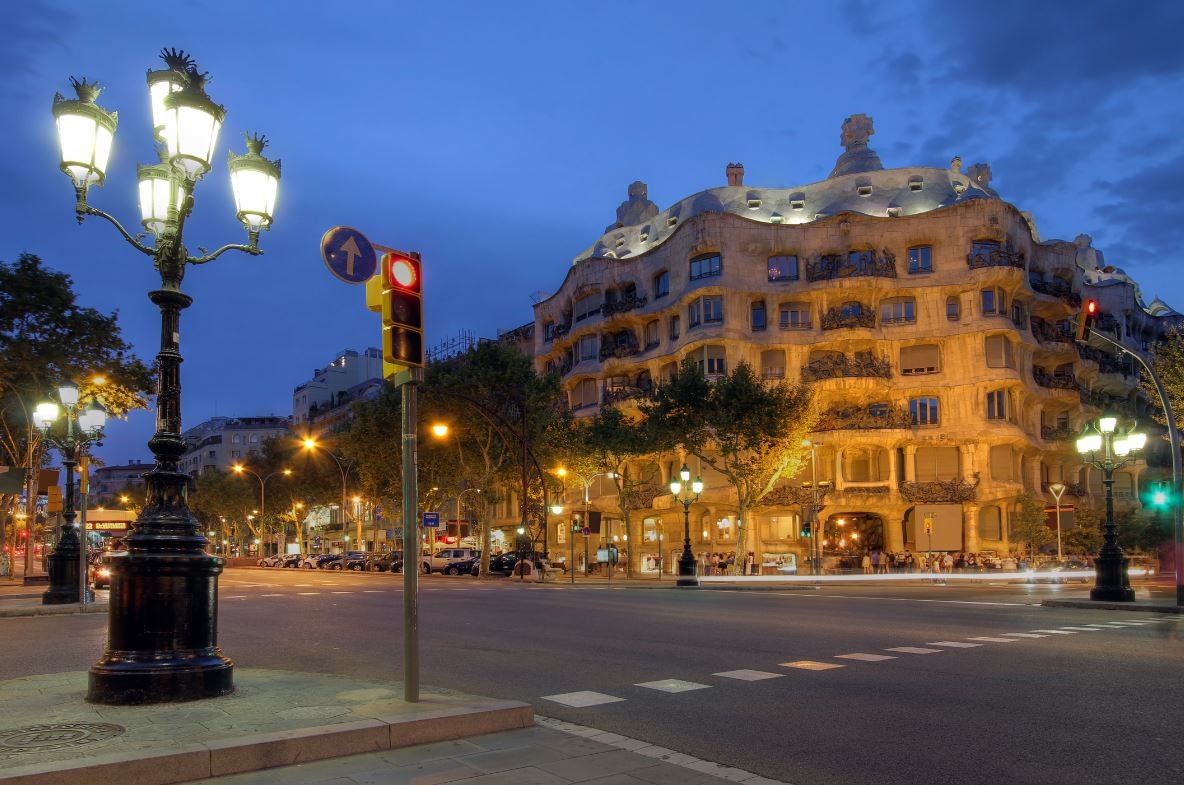
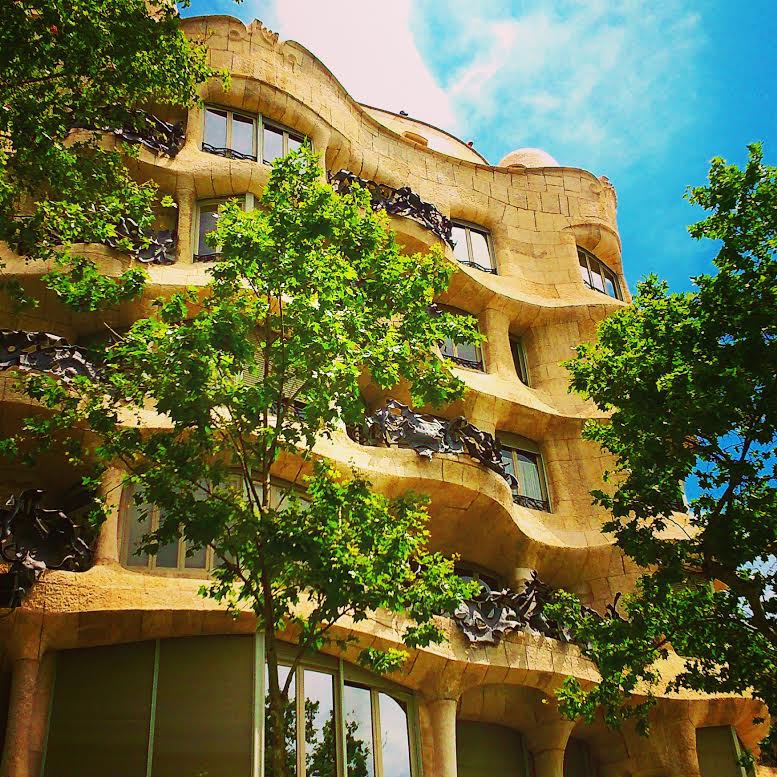
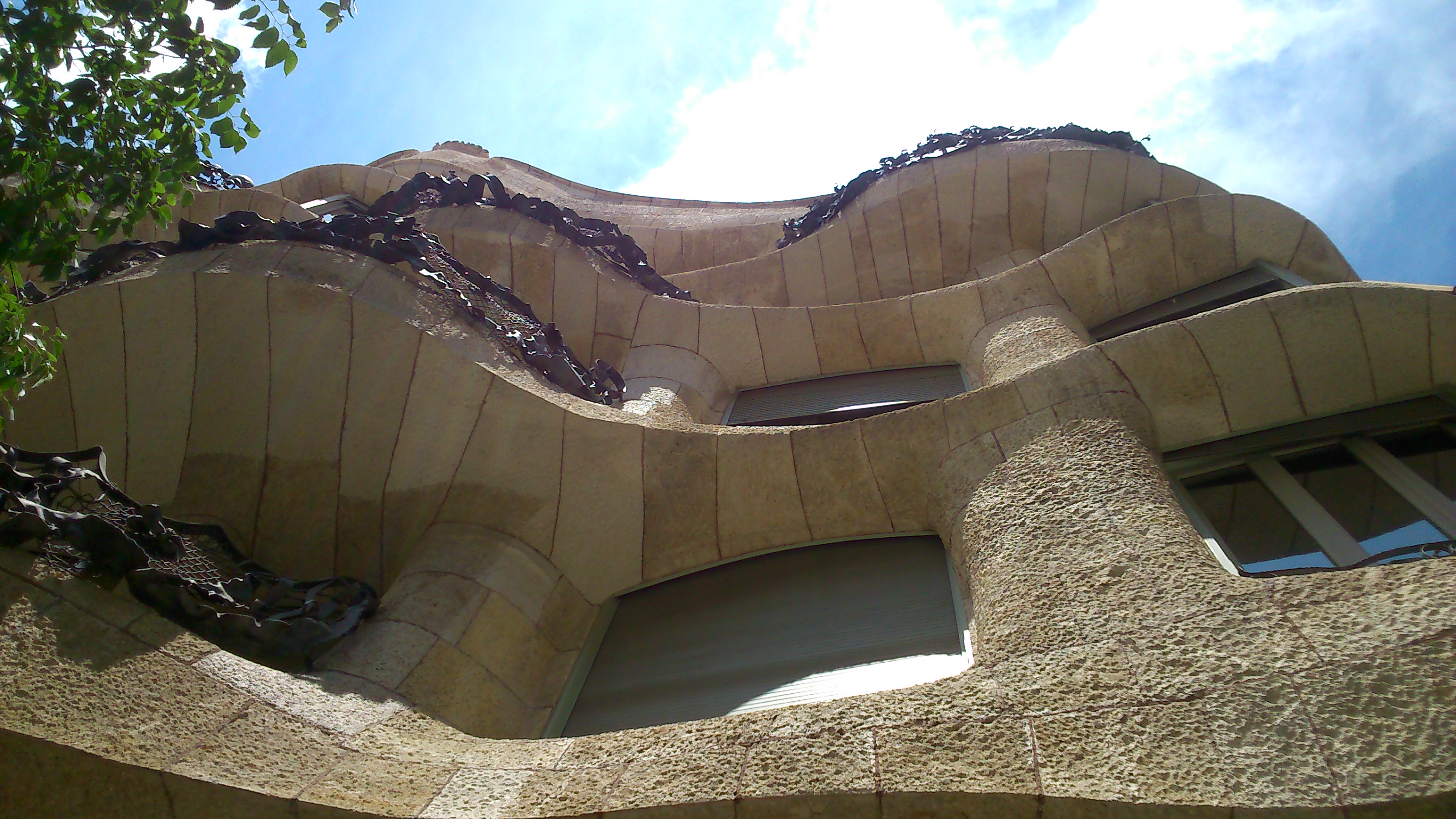
La Pedrera is one of Gaudí’s most well-known residential constructions and the last of his civil works. It was built between 1906 and 1912 and, despite an undulating stone façade and twisted iron balconies, which made it controversial at the time, was recognised as a World Heritage site in 1984.
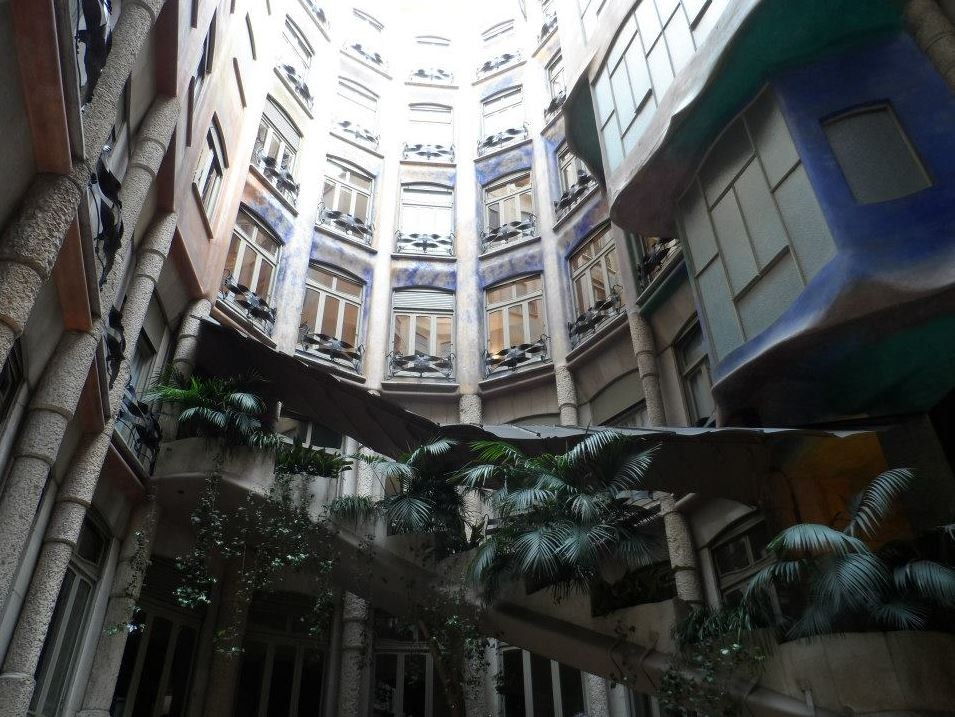
Casa Milà is made up of two buildings, structured around two courtyards that offer light to the houses’ nine levels. The main floor was intended for the commissioning family, whilst the remainder was split into over 20 rental properties.
The exterior’s impressive mass of rippling limestone explores the irregularities of the natural world. Upon entering the building, this theme is again echoed. The columns and floors devoid of load bearing walls were also remarkable architectural innovations for the time.
The roof is spectacular, crowned with chimneys, skylights, exits and fans. The chimneys were coated in limestone, broken marble and glass, and were twisted to allow more smoke to escape. The view from the roof is also worth the nine flight climb.
Casa Batlló
Another of Gaudí’s residential buildings, Casa Batlló, reconstructed in 1904 from a house built in the 1870s, was designed for the aristocrat Josep Batlló, who moved his family into the lower two floors before renting the remaining space as apartments.
The attention to detail is captivating: windows vary in size, dependent on the height of the floor from ground level, and the intricate exterior designs and colours are inspired by marine life. From a distance, the balconies and supporting pillows look like skulls and bones, adding to the naturalistic feel.
As with Casa Milà, the building was criticised during construction for its radical design; however, it was announced as one of Barcelona’s best three buildings by the city council in 1906 and is now on the UNESCO World Heritage list.
Parc Güell
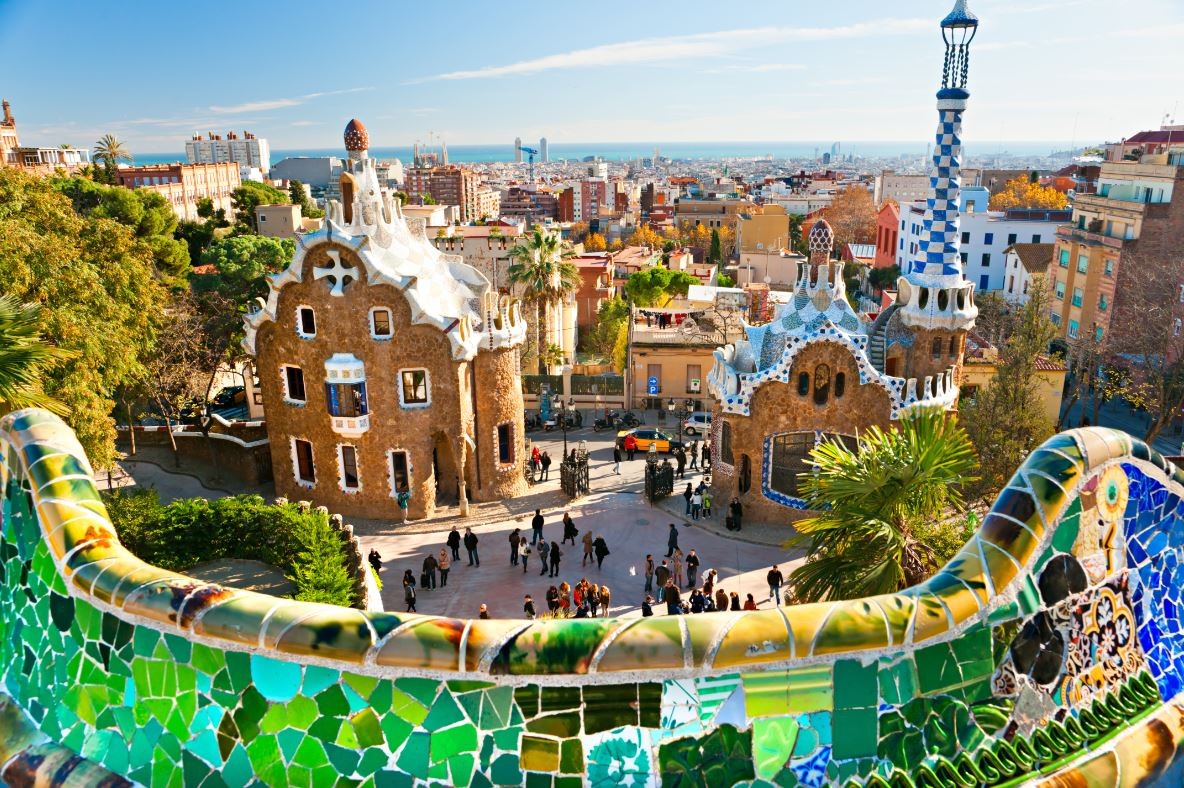
This stunning garden complex on the hill of El Carmel was commissioned by Eusebi Güell and built between 1900 and 1914.
Although today part of the UNESCO list ,’Works of Antoni Gaudí,’ the park was originally an unsuccessful housing site intended to exploit the fresh air and city views. Only two of the planned 60 houses were erected; after no buyers came forward, Gaudí bought one and moved in with his family.
There are numerous architecturally fascinating aspects to explore: the columns shaped to simulate palm trees, rubble surfaced arches growing from the ground, a gazebo fashioned from twisted angle iron. However, the focal point of the park is the main terrace, due to its stunning views and surrounding mosaic benches.
La sagrada Familia
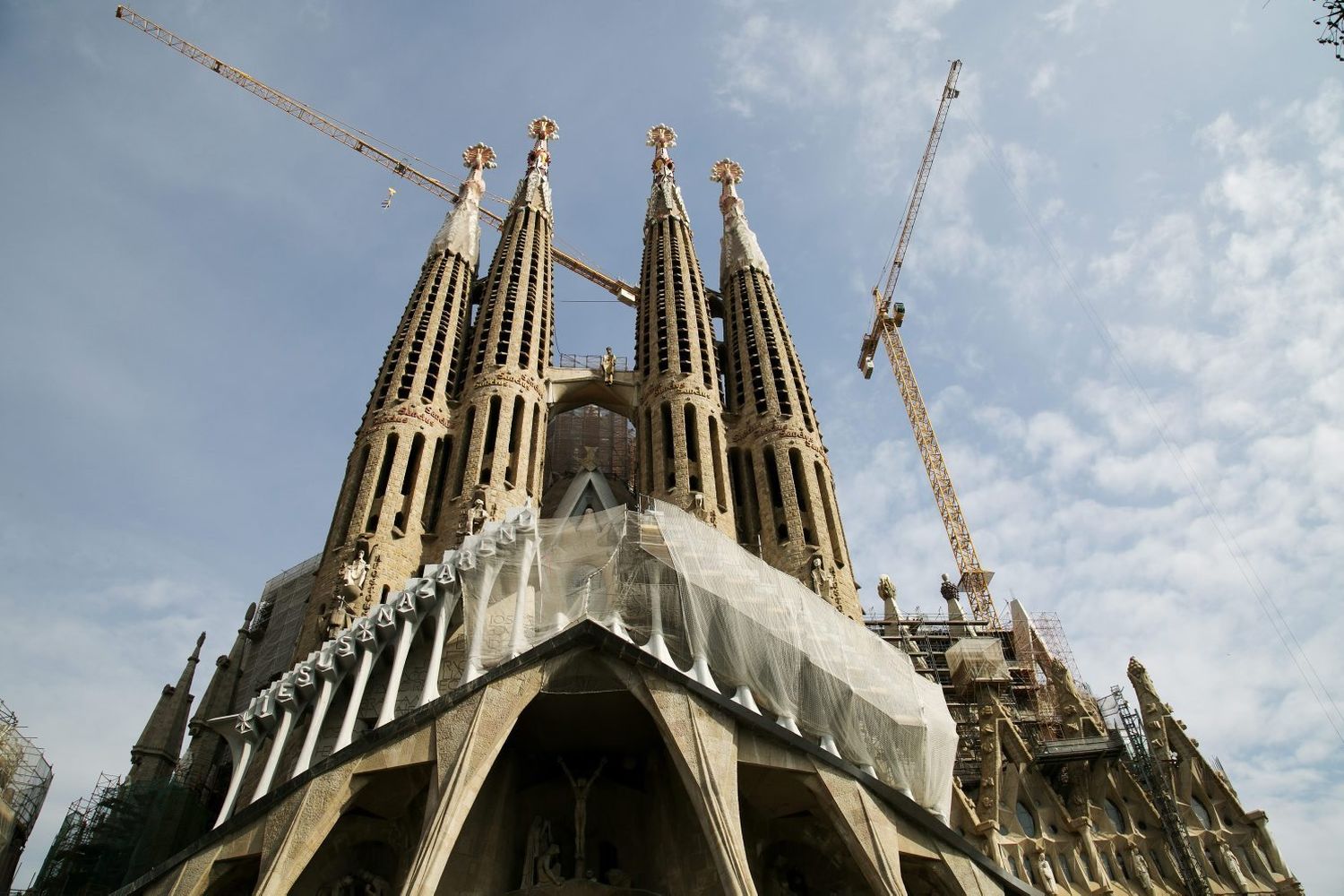
The spectacular Sagrada Família has been under construction for over a hundred years, since work began in 1882. Gaudí had an incredibly active role directing the construction of this magnificent Roman Catholic Church until his death in 1926, when only a quarter of the project was complete. Following the Spanish Civil War in 1936, much of his workshop, along with models and plans, were destroyed by Catalan anarchists. Thus, parts of the present design have been based on reconstructed versions and modern adaptations, causing controversy amongst many Catalan architects who argue that these alternative materials disregard Gaudí’s original proposal.
The exterior and interior designs are incredibly intricate, with themes drawn from phrases from the liturgy. The towers are decorated with words like ‘Excelsis’ and ‘Sanctus’ and the door is covered in biblical words written in various languages.
Construction has recently accelerated thanks to computer assisted design technology that allows the stone to be shaped off-site using a CNC milling machine. Prior to this, it was carved entirely by hand. Despite its incomplete state, the church has been recognised as a UNESCO World Heritage Site.
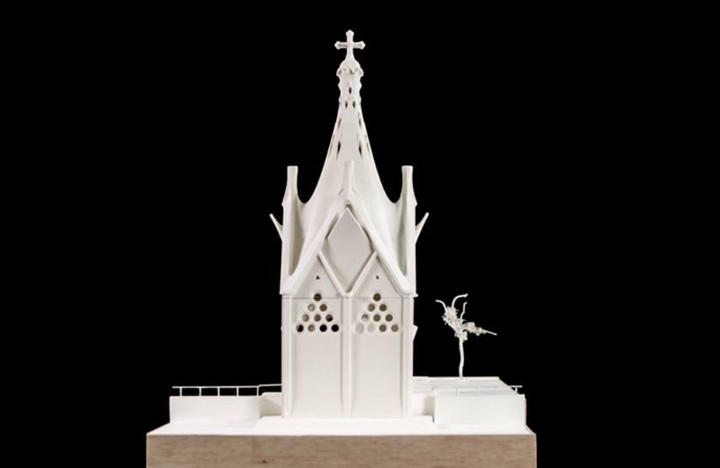
Chile may soon be home to the only Antoni Gaudí-designed building located outside of Spain. Chile has confirmed the construction of the Gaudí Cultural and Spiritual Center in the city of Rancagua, which will include a chapel designed by the Catalán architect.
The project originated in 1922 through a series of letters exchanged between Gaudí and Chilean Franciscan Friar Angélico Aranda, who asked Gaudí to design a chapel for Chile. “I wish to implement an original work, very original, and I thought of you,” wrote Aranda to Gaudí, who by then was immersed in constructing his masterpiece, La Sagrada Familia. Since 1996, Chile’s Corporación Gaudí de Triana has been working to make the design resulting from this conversation a reality.
Aranda had met Gaudí in Barcelona in 1909, and years later would write the architect asking him to design a chapel “as only you know how to do,” specifically a “porziuncola” or “place of forgiveness” dedicated to Saint Mary of the Angels.
“This project would serve as a spiritual fellowship between Spain and America,” Gaudí responded, just four years before his death. Gaudí offered Aranda the design of a chapel originally planned for the back section of the Sagrada Familia’s apse.
According to Christian Matzner, the architect now in charge of the project in Chile, Gaudí’s design dates back to 1915 and was inspired by Spanish architect Luis Bonifacio’s work inside the Girona cathedral in Spain.
In one of his letters Gaudí included a croquis of the chapel’s original location in the Sagrada Familia, writing:
“I’m interested in some preliminary notes, like: location and site conditions: if the place where it is going to be located […] is an open area or if it will be located next to other buildings, and in that case what they are like. […] Another interesting note would be to know the intensity of the prevailing winds and if there are frequent cyclones.”
The current project is 1,250m2 overall, including both the porziuncola and the underground spaces. The chapel will stretch 30 meters above its 10 square meter base, and inside, the chapel will have a central altar and a subterranean crypt where the remains of Aranda will rest.
With regards to the design, Matzner told press that it would form a “hyperboloid and symbolically represent the Assumption of the Virgin, where she rests in her bed and the angels, located on top of the pediment, shelter her during the ascension.”
With a budget of more than $7 million, the Gaudí Cultural and Spirtual Center will be 10,858m2, including the chapel, a cultural center, an arts schools, a cafeteria and a contemplation space open to all religions. Work on the project is expected to begin during the second half of 2016, with the project’s inauguration planned for 2017.
Today we want to introduce our BARCELONA & GAUDI walking tour. A perfect start for your Barcelona stay!
Around the Modernism Route, we paint the sinuous dream that took Antoni Gaudí from his concern into the social, to his absorption into the divine, to finally become “the last cathedral’s builder”.
We are gonna walk around the figure of Antoni Gaudi, the most known Spanish architect of all the times and perhaps the dreamiest of all.
First of all, we will discover the Barcelona who received and exalt him as the standard of Catalan Modernism, then we will fly to New York for some moments, to finally draw some lines of his Greatest Work, The Sagrada Familia.
We will finish our walk speculating about his real intentions building the forever futurist Casa Milà.
Join our urban expeditions around Barcelona’s architecture and we will open your mind to the beauty of our profession…
Doesn´t matter if you don’t know anything about architecture…let be inspired by us!!!!!
While mass tourism overshadows the historic value of Gaudí’s work, we celebrate the life of the genius from Reus (Catalonia), who passed away ninety years ago.
“Any profound interpretation is swept away by tourism. Visitors always get a superficial overview”. These are the words of architect Jaume Prat, the Commissioner of the Catalan architecture exhibition at the Venice Biennale: Aftermath. Arquitectura més enllà dels arquitectes (Architecture beyond architects). It is not the groups of tourists who crowd the Italian city that Prat is thinking of, but well-known works such as Saint Mark’s Basilica, and a name much closer to home: Antoni Gaudí.
One of the last images of Gaudí
Gaudí died in a Barcelona hospital ninety years ago, on June 10 1926, after being run over by a tram and spending three days in his death throes. Although he was first taken for a beggar when he was assisted at the accident spot and was rushed to Hospital de la Santa Creu and Sant Pau, Gaudí’s funeral was solemn and massively attended.
Ever since his passing, we have had wide-ranging views on Gaudí, depending on the interests of the people and the institutions that live off the architect’s name and legacy: Gaudí is the most iconic sight in Barcelona city, an exceedingly devout man on the path to sainthood, the inventor who turned his observations of nature into structures, a hot-headed Catalan separatist and so on. Gaudí has been used to justify many causes, but his heft as an architect —the most important element of all— has often been sidelined. Mireia Freixa, a professor of History of the Arts at Universitat de Barcelona (UB), claims that “there are still areas worthy of research, but now is the time to reflect on how to best preserve Gaudí’s cultural and material legacy”.
The list of platitudes about Gaudí is commensurate with the wider public’s profound ignorance of his work. “Today’s approach to architecture is very social, which leaves out parts of Gaudí because, rather than just one single Gaudí, there are many different Gaudís. His legacy is limitless, we won’t see the end of it”, insists Prat. There is a young Gaudí who designed industrial premises for a workers’ coop in Mataró. We also have the professional Gaudí, who designed a luxury palace for Eusebi Güell, the same client for whom he built the crypt in Colònia Güell. In the latter building one can find reused bricks and metal railings that are made from the needles of looms that were no longer in use. And Gaudí completed all these works before giving the Sagrada Família his full attention. While Prat underscores Gaudí’s complexity, she regrets that Gaudí’s ambition isn’t more widely recognised by the people and she states that “we are stuck with a pantomime character painted with thick strokes”.
The danger of dying of success
Historian and art critic Daniel Giralt-Miracle, who was the Commmissioner of Any Gaudí (the Gaudí Year), claims that visitors have taken over Gaudí’s buildings, but many of them are only looking to take a photograph. Giralt-Miracle warns that “tourism in Barcelona city and visits to Gaudí’s buildings must be regulated so as to avert the Venice effect. They must be regulated to avoid self-destruction and dying of success”. Still, he believes that the dissemination of Gaudí’s legacy has had a positive impact on the Catalan public, which has shifted from “indifference” to “passion” for Gaudí’s work in just a few decades. “The interest that his buildings elicit is fully justified, but visits and knowledge should be managed from a broader standpoint. His architecture must be well-preserved and kept undamaged, that’s what truly matters”, says architect Xavier Güell, who has penned a monograph on Gaudí’s work.
Freixa believes that “Gaudí’s popularity has helped to make his image banal; I’ve seen some incredible stuff, such as flamenco dancers and bulls made of trencadís (pique assiette) and turned into the image of Barcelona city: Gaudí as a spectacle. But that shouldn’t prevent us from having a playful view on Gaudí. The trouble is that visitors and the general public don’t know history. It is a consequence of the lesser importance afforded to the Arts in general education”.
“Gaudí’s character is unique and cannot be pigeonholed. At times, this makes him morbidly appealing. He is not the genius that some claim, but a man with both feet firmly planted on the ground and an extraordinary sense of tradition and construction”, says architect Jaume Sanmartí, who directs the Càtedra Gaudí. “If you combine this sense of tradition and construction with his genius, quite naturally you get work that is unique”, he says, “and it is also easily understood, whilst avoiding trite explanations. Gaudí has no heirs who can stand up for his rights and he has been subjected to all sorts of arbitrariness”.
The fact that Gaudí became a very important architect in his lifetime is another reason why his exceptional architecture is a magnet for commercial exploitation and it lends itself to exaggerating some aspects of Gaudí’s work, while others are played down. In his book Antoni Gaudí. Fuego y cenizas (published by Tenov), Gaudí expert Juan José Lahuerta —who manages the MNAC collections— claims that “no other architect managed to meet, like Gaudí did, the one condition that the market imposes on any readily available product: to be a convincing representation that anything is possible”.
From a historic image of the so-called Mansana de la Discòrdia (the “block of discord” in Barcelona city, which features Casa Ametller by Josep Puig i Cadafalch and Casa Lleó Morera by Lluís Domènech i Montarer) Lahuerta explains how architecture was starting to be perceived as “the great curiosity” of the time, in a city that had become “a trading spectacle”. Even Gaudí himself was aware of it. In one of his texts collected in El pensamiento de Gaudí (published by Dux), the architect writes about the potential of his buildings beyond their architectural value and refers to them as a touristic “asset” which could yield substantial profits.
A covered gallery crown the facade of the Passion. The Sagrada Familia will be finished in 2026. / Francisco Melcion
From Le Corbusier to Zaha Hadid
Dutch architect and Gaudí biographer Gijs van Hensberg has just written a monograph on his work entitled La Sagrada Família. El paradís terrenal de Gaudí (“Gaudi’s earthly paradise”, published in Catalan by Rosa dels Vents). The Dutch author is also very critical of the way that Gaudí has been regarded. “He has been misunderstood entirely. It has taken us one hundred years to realise that he was a true genius. While the works of Norman Foster, Richard Rogers, Santiago Calatrava and Zaha Hadid are hardly Gaudí knock-offs, they are barely conceivable without Gaudí and his uncovering of the catenary arch”. Jaume Prat and Daniel Giralt-Miracle agree that Gaudí’s is one of the big names worldwide. Prat states that “Gaudí lives on. He left us his method and a way of going about things. I’m not sure we would have contemporary architecture as it is today, were it not for Gaudí. There would be no Le Corbusier without Gaudí”. Giralt-Miracle believes that the Catalan architect is on a par with Mies van der Rohe and Frank Lloyd Wright.
Not only does Gijs van Hensberg regard Gaudí as a genius for creating structures, but he also underscores the architect’s ability “to tell stories of a religions nature”. “His greatest legacy are these well-defined, superbly-executed projects. Every one of Gaudí’s works is unique and represents a new effort”, Güell remarks. And his only reservation is this: “Gaudí’s work is widely-known and there is a singular building —Sagrada Famíla— where we ought to be very clear about what was Gaudí’s own doing and what has been built afterwards, which doesn’t mean that the latter is a mistake”.
Three questions for Jaume Sanmartí, the director of Càtedra Gaudí
Are there any Gaudí buildings that still require an intervention?
The pavilions of the Güell stately home in Pedralbes. The former stables used to house the Càtedra Güell while my predecessor Bassegoda Nonell was the director. He had them restored. But both are almost derelict nowadays.
What are the main upcoming challenges surrounding the work of Gaudí?
We must drop his personal history and focus on what we are to do with his buildings from now on and what current technology we can use to preserve his legacy.
As for the Sagrada Família, how do you think the project should have been carried on?
History should have repeated itself. Gaudí took over Francesc de Paula Villar’s neogothic project and transformed it. After Gaudí’s death, someone should have continued the Sagrada Família in a different way. Jujol first —and Enric Miralles later— could both have accomplished this with no trouble.
Sagrada Familia’s Nativity facade
Nine thoughts by Antoni Gaudí
Isidre Puig Boada (1890-1987) met Gaudí as a young architect and often visited him at the Sagrada Família building site. But it wasn’t until 1981 that the writings, ideas and thoughts collected by him and other peers of the master’s were eventually published. Dux publishers have recently released the book in Spanish: El pensamiento de Gaudí (Gaudí’s Thinking).
“Mediterranean arts will always be markedly superior to the north’s because they are applied to the observation of Nature”. “Everything stems from the great book of Nature; men’s works are already a printed book”. “Originality is about getting closer, going back to the origin”. “The model I have seen by Le Corbusier is a stack of parallelepipeds (…) His mind works like a carpenter’s”. “It wouldn’t surprise me if one day Casa Milà became a hotel, given the many lavatories and how easily its layout could be changed”. “The more scientific, the more useless men are for reality”. “I am sorry that I cannot complete the Temple; I will age and others will take over to renovate it; this will make it all the greater”. “A faithless man is a spiritual amputee”. “My belief in immortality will grow stronger for as long as I see people die”.
Our walking tour BARCELONA & GAUDI has received some reviews like that one:
“Informative and enjoyable tour
We booked BAW’s Gaudi walk before we left for Spain. It was easy to do and Miguel from BAW was prompt replying to questions by email. The only public Gaudi tour BAW had scheduled during our stay was on our last full day in Barcelona. Since the BAW tour included just the exteriors of the Gaudi buildings, the days prior to the tour we visited the interiors of the Gaudi buildings on our own.
By the day of the BAW tour, we were ‘Gaudi’ed’ out and we considered canceling or seeing if we could change to a different tour but we are so glad that we did not.
Joan from BAW was an excellent guide. We were extremely fortunate that we were the only ones on the tour that day. Not only did we learn about Gaudi but we also learned about the development of Barcelona and its Eixample neighbourhood. Joan covered the development of the modernist movement and pointed out interesting architectural elements and city planning concepts. He patiently answered our questions and explained concepts very clearly to us (though we love architecture neither of us has a background in the field). The time went by fast! If we visit Barcelona again, we will likely try BAW’s other tours as it would be interesting to learn more about the city, it’s architecture and development ( past, current and future). It was great to walk the beautiful city with someone so knowledgable about its history and architecture.”
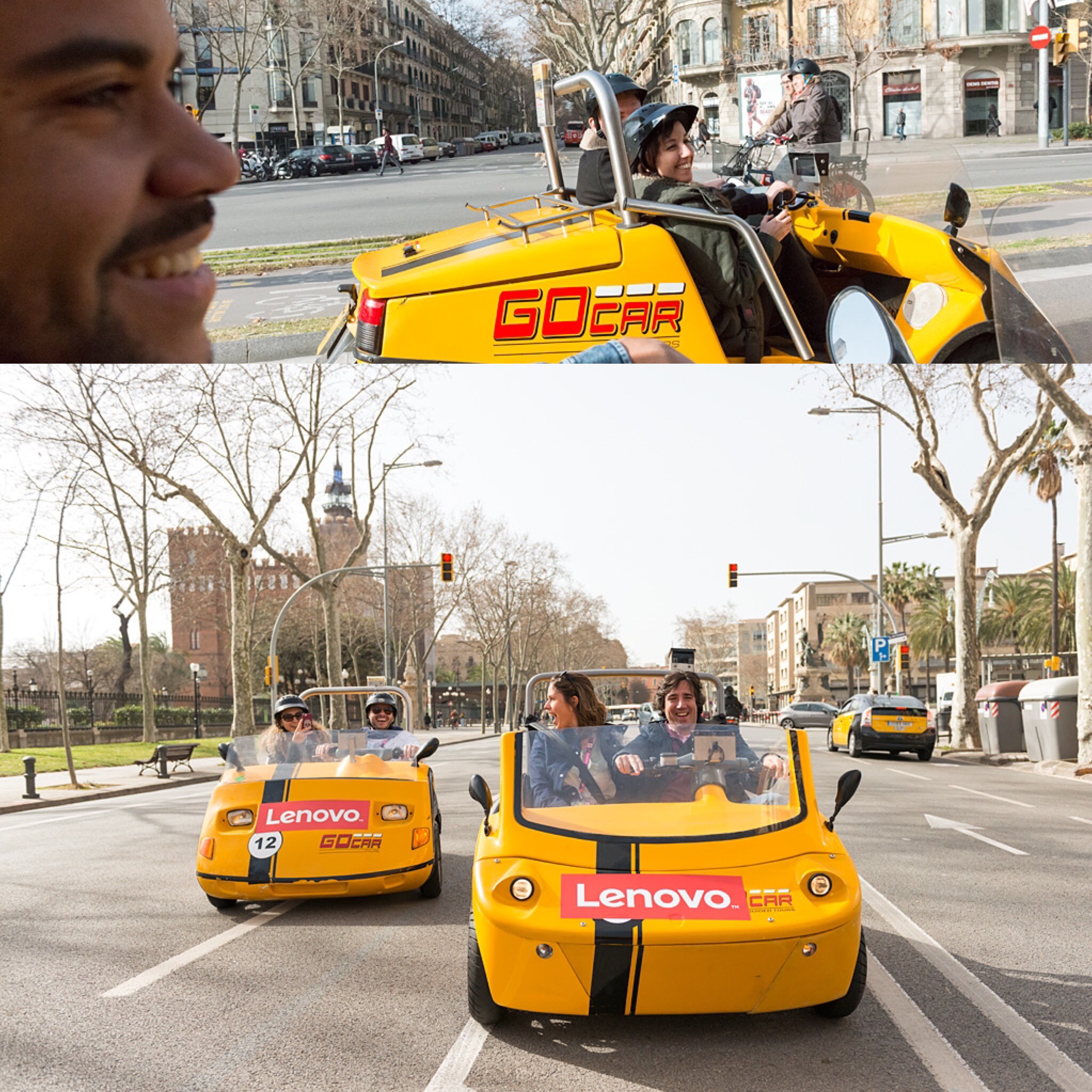
Last week Barcelona Architecture Walks developed and led an special tour for a Lenovo group of Influencers within the context of the Mobile World Congress 2016 that happened in Barcelona from the 22nd to the 25th of March. The tour presented Antoni Gaudi as a #GoodWeird architect, linking with this year Lenovo campaign. Martina gave them a blowing up presentation to afterwards ride on #gocars to the Sagrada Familia….Here you have some picts about this special tour.
Contact us for any special architecture tour you imagine and we will exceed your hopes!
And if you book one ticket on our weekly group Walks you will experience the same but shared!
We start the month with great reviews at Tripadvisor but we would like to point one that joints our Walking Tours with the new collaboration we already start with our friends of Food LoverTour…here you have it!
“Gaudi Architectural Walk”
Reviewed 3 June 2015
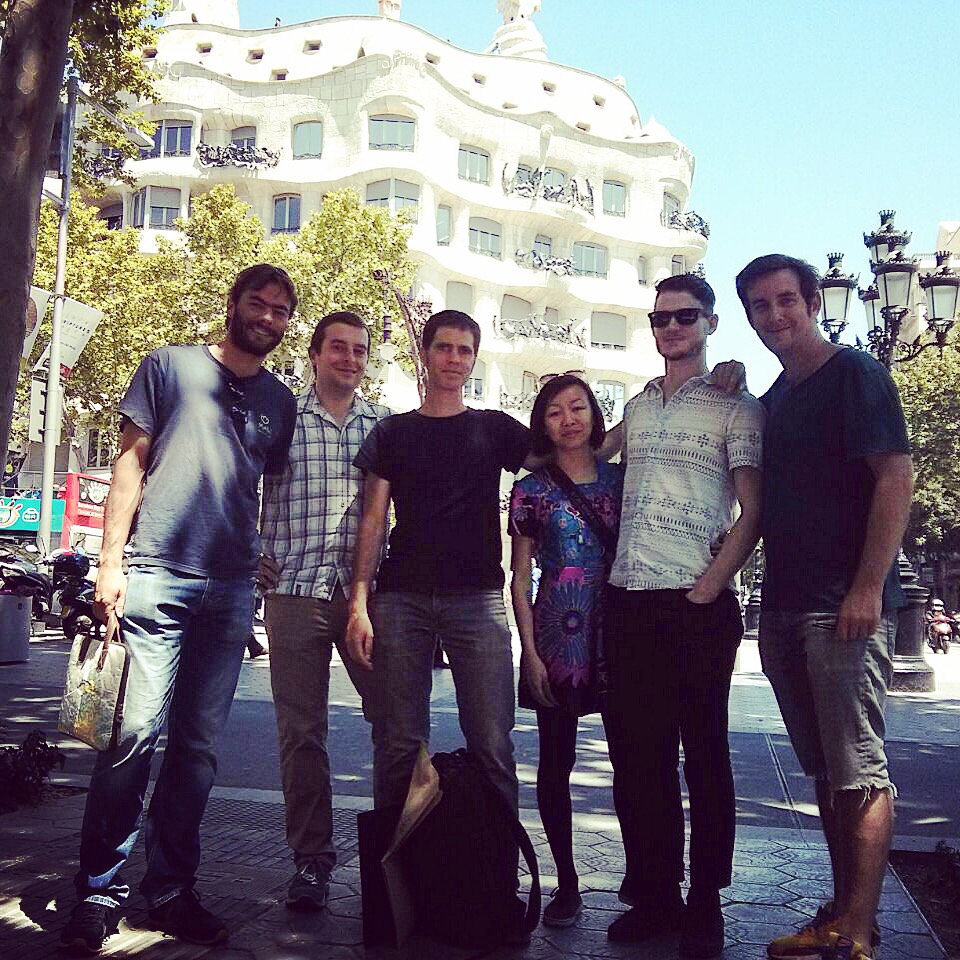
“Having lived in Barcelona for some time a few years ago, I booked this tour so that my wife could get to know the city and see some of Gaudi’s most famous private buildings. We got very lucky and had a small group of only five people including our guide, two of whom happened to be guides for the Foodlovers tour company and added to the tour by giving us hints as to the best restaurants that we walked by.
I was totally blown away by the way in which the tour opened up the city not only to her but to me also, despite thinking that I knew the city quite well. The way our guide explained the planning of L’Eixample, the history (social, political, and technical) of the modernist architectural movement in Catalonia, and then situated Gaudi’s work within those histories was revelatory. We both walked away with the feeling that we had a real grasp not only on the architectural genius of Gaudi but on the history and plan of the city as a whole. 10/10 would go again”