Llum Barcelona 2023

Light arts Festival from 3 to 5th February : Llum Barcelona 2023

Poblenou lights up for three exceptional nights every February, trying out various ways of imagining the city of tomorrow. The Llum Barcelona 2023 light arts festival, one of the most important events on Barcelona’s cultural calendar, will once again be bringing tens of thousands of city residents together in streets and squares, around the works of creators in every field, ranging from contemporary art to design and architecture, and from technology to design and lighting.

Each edition of Llum BCN is a big festive public event. It is also a collective experiment in perception and participation, and an urban lab where we explore how we might contemplate and live in our shared territory, the city, from new, previously unknown perspectives.
SHOW MORE OF THE MAIN TEXTAn event that looks at our closest surroundings cannot ignore the more immediate crises that stalk us, such as our changing relationship with energy, nor the major crises in the background, such as climate change. The festival projects offer responses to collective challenges, with new tools and ways of doing things. This edition’s projects propose new energy-self-sufficient post-carbon urban icons, such as Another Moon from the Korean collective Kimchi and Chips, a “second moon” that will float above Poblenou Central Park, sketched by lasers powered only by solar energy. Thijs Biersteker from the Netherlands, one of the European artists who is most effectively using technologies to produce new imaginaries for the energy transition, calls on the air in We Harvest Wind, an interactive kinetic sculpture powered by wind power.

Re-Generation, project by IAAC INSTITUT D’ARQUITECTURA AVANÇADA DE CATALUNYA

The air that floats above Barcelona will be the setting for other festival projects, such as Atmospheric Lighthouse, a real-time visualisation of everything invisible in the city’s atmosphere, and which will turn the skin of Glòries Tower into a large sail. A few metres away, at the DHUB, Abel Korinsky and Orhan “aib” Kavrakoglu will be presenting Call Out, a giant light matrix that traces the orbits of satellites which, at the same time, cross Barcelona’s sky a few kilometres above our heads.
MORE

Barcelona & The Future

Walk through the smart city in search of our future!

Today we want to talk about our Barcelona & The Future City walking tour, a walk through the smart, parametric city in search of Barcelona’s future!

Jean Nouvel, Ricardo Bofill, Rafael Moneo, Fermín Vázquez, MBM Arquitectes, Jordi Badia, Josep Benedito, Batlle & Roig, David Chipperfield, Rahola Vidal and Enric Ruiz-Geli: can all these chefs cook up a unique, tasty stew?

blank

This is an urban walking reflection on the main aims of urbanism and how they have been applied in the 22@ district in Poblenou. This was once a neighborhood full of small factories that is now being revitalized in an attempt to recapture the spirit of it’s industrial heyday.

While we try to catch some of the stardust coming off the Media-TIC building (2011 WAF winner: World Building of the Year) and rub shoulders with architecture’s brightest stars, we’ll talk about independence, patents, parametric architecture, cradle to cradle, superblocks, the carbon footprint and, of course, Ildefons Cerdà, the Master and Founder of Barcelona’s gridded plan.

blank

All the guides of Barcelona Architecture Walks are practicing architects, most of whom are professors of architecture, as well as architecture critics. This variety of top professionals provides a wide spectrum of knowledge on a huge range of topics. The information and the language used are understandable either for an expert or an initiated walker.

We offer Barcelona & The Future City walking tour every Monday starting at  4:00pm. We can offer PrivateTours every day starting at 10:30am or at 4:00pm. Booking in advance is required to attend to these Walks.

Each route is driven by a set of themes and concepts that decode the city whilst stimulating new ways of thinking about and seeing Barcelona. Come and walk with us and live a fantastic experience!!!

BOOK NOW!


Poblenou: from the industrial to smartcity

Poblenou, from Barcelona’s old industrial centre to new business, innovation and tourist district.

El Poblenou is a northern neighborhood of Barcelona, contained within the district of Sant Martí. Our BARCELONA & THE FUTURE is an urban walking reflection on the main aims of urbanism and how they have been applied in the 22@ district in Poblenou. This was once a neighborhood full of small factories that is now being revitalized in an attempt to recapture the spirit of it’s industrial heyday.

But, what makes Poblenou so special? Today we want to tell you something more about the history of this neighbourhood.

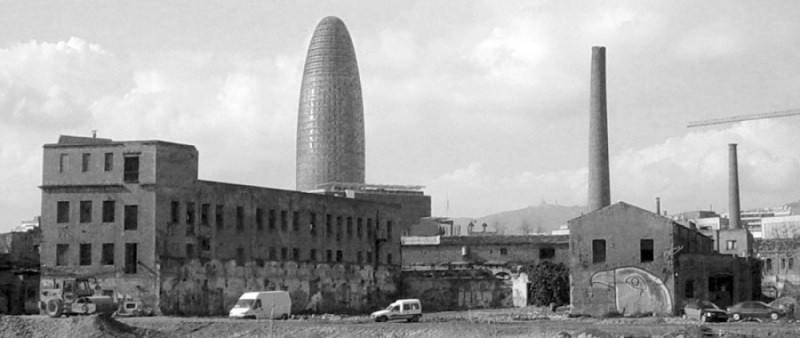
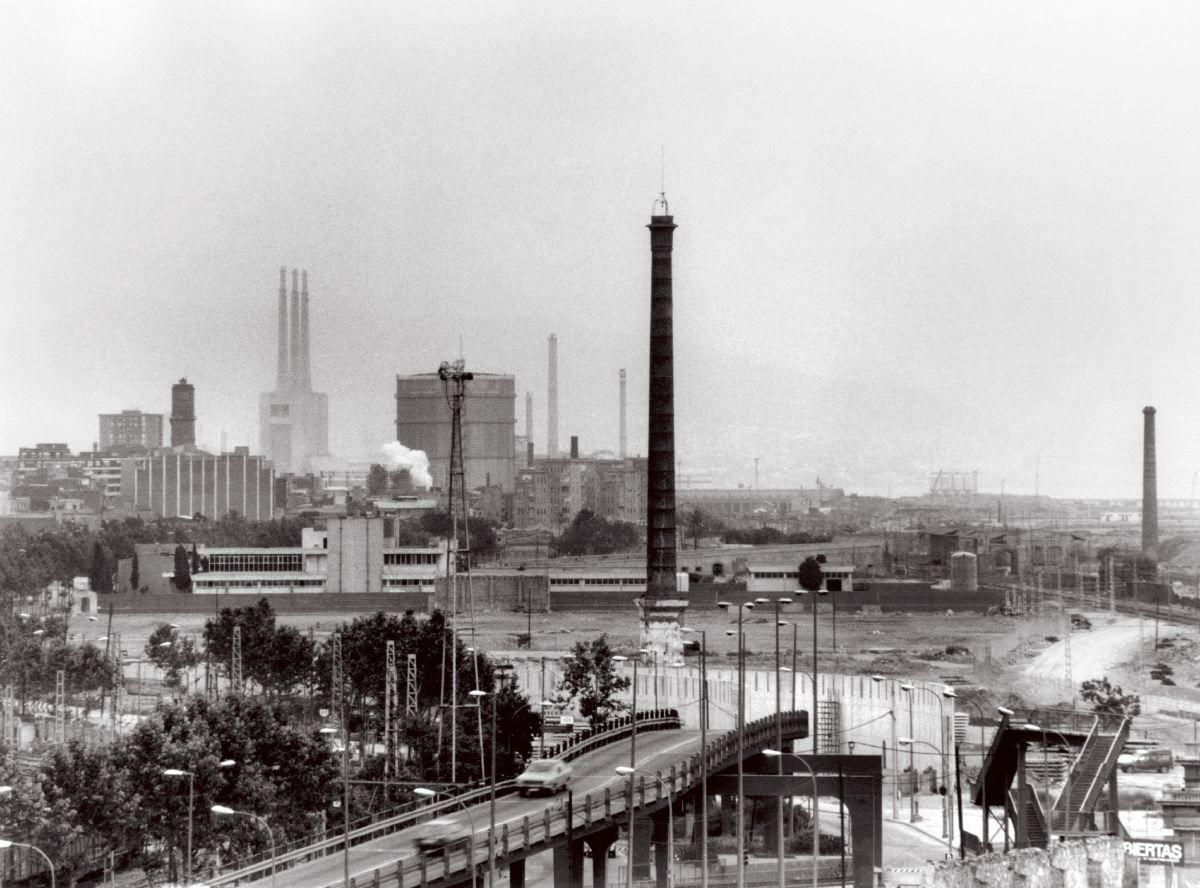
blankHistorically known as the ‘Catalan Manchester’ for its role as the city’s industrial centre in the 19th and early 20th century, nowadays it is becoming a very attractive place to live for many young people. Strongly revitalised after the 1992 Olympic Games and currently characterised by a rich architectural landscape and vibrant artistic scene, it is the city’s new business and technology district, being also very interesting for tourists willing to step outside of the usual routes.

blank

During the Industrial Revolution Poblenou became an industrial hub

The land that El Poblenou occupies was once marshy, which is recalled by Llacuna street and metro station (Llacuna is Catalan for lagoon). Between the 12th and 13th centuries, the area was used to farm cattle and some masías (farmhouses) were built. Until the eighteenth century the land was only used for agriculture.

During the Industrial Revolution, Poblenou played a central role, becoming the cornerstone of not only Catalan but also Iberian industry, particularly in the textile sector, so as to earn the nickname ‘Catalan Manchester’. Among the factors promoting this change were: the presence of extensive and cheap land and the proximity to Barcelona’s harbour. Poblenou became the industrial neighbourhood of the city and people started living here. A railway connecting Barcelona to Mataró was built” in 1848, the first railway in the Iberian Peninsula.

blank

The 1992 Olympic Games triggered Poblenou’s rebirth

After a period of decay, Poblenou underwent a further dramatic transformation, with the 1992 Olympic Games being the main trigger for this, recovering the area and opening the entire city to the sea. Most of the factories and train lines next to the seafront were torn down while those in good shape and located throughout the district were mostly preserved. Many new areas were developed such as the Vila Olímpica (the residential area for the athletes during the Olympics), and new artificial beaches were built. The Vila Olímpica also became the first residential area built next to the city’s coastline, besides the old fishing neighbourhood of Barceloneta. Also, in 1999, the Diagonal Avenue, which previously stopped at Glòries Square, was stretched to the sea and the new Diagonal Mar and Fòrum areas.

blank

The neighbourhood’s revitalisation continues with the 22@ Plan

Poblenou’s revitalisation continues with a new plan – called 22@ – aimed at reviving the entire area through the creation of a two-hundred-hectare technological and innovation district, which was definitively approved by Barcelona’s City Council in 2000. The aim was to attract local and international companies, mostly working in the technology and creative sectors, along with the development of residential and leisure zones.

Today the 22@ District plays host to universities, research and training centers, startups and cutting-edge technology companies alike.  Since 2000, more than 3,500 businesses have moved to the innovation district and, with the almost 100,000 employees working there, Poblenou has witnessed a nearly 25% increase in residents.

blank

With our BARCELONA & THE FUTURE walking tour, you will discover so much more about this special district and we rub shoulders with architecture’s brightest stars, we’ll talk about independence, patents, parametric architecture, cradle to cradle, superblocks, the carbon footprint and, of course, Ildefons Cerdà, the Master and Founder of Barcelona’s gridded plan.

Book here

×