Barcelona 2026 World Capital of Architecture

Barcelona to be the international epicentre for architecture in 2026

Barcelona is set to host the most important event in architecture in 2026, with the arrival of the World Architecture Congress by the International Union of Architects (UIA). At the same time, the city will be the UIA-UNESCO World Capital of Architecture. The choice of Barcelona to host these two events recognises the city’s architecture, urban planning and landscape as an international example and will offer a chance to reflect and share experiences on urban planning models and architecture as tools for social development and quality of life.

The assembly by the International Union of Architects, held in Rio de Janeiro (Brazil), chose Barcelona over the other candidate city, the Chinese city of Beijing, by 147 votes to 129. The vote in favour of Barcelona means the city will hose the most important event in this sector in five years’ time. Under the slogan ‘One today, one tomorrow’, the congress will use the city’s world-renowned relationship with architecture as an example to debate a feasible and sustainable future and make an analysis of the current socio-economic and environmental context. The goal is to address the challenges facing architecture and define the tools for meeting them.
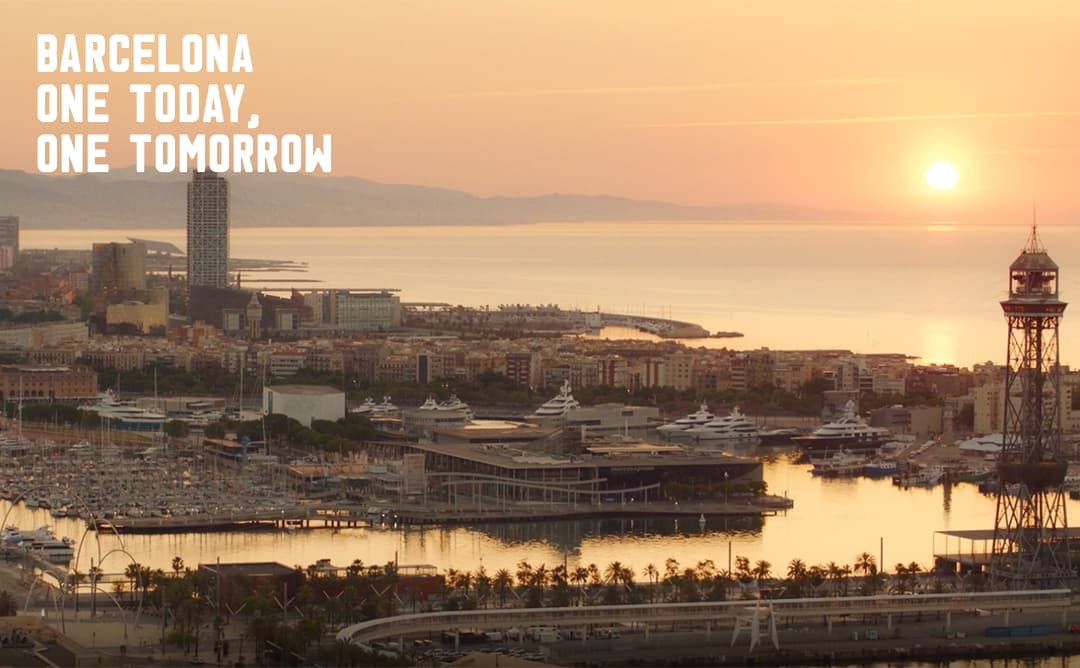
At the same time, throughout the year, Barcelona will be organising multi-disciplinary cultural events on architecture and urban planning to convey their importance to all citizens. The city will thus become an inclusive, Mediterranean point of reference, open to the world.

Hosting the two events provides a great opportunity to strengthen the role of the city as a centre for production and thought on architecture and the design of contemporary urban planning. The events will explore the capacity of urban planning to improve people’s lives, well-being and sense of social and cultural belonging, as well as the need be able to extend these factors and make them important in other countries, as a transformational tool and a means of social change to move towards the cities of the future.
 

blank

Seventy years of history

UIA congresses have been held since 1948. The goal on each occasion is to address the challenges facing society through the rigorous knowledge contributed by professionals in architecture. The city held this same event a quarter of a century ago, in 1996. At that time the slogan was ‘Present and future: architecture in cities’, the event proving to be a great success with the public and having an international impact.

MORE

Frank Lloyd Wright buildings added to UNESCO

Eight Frank Lloyd Wright buildings added to UNESCO World Heritage List

Eight buildings by American architect Frank Lloyd Wright have been added to UNESCO’s World Heritage List, including his iconic Fallingwater house and the Guggenheim Museum in New York.

The eight buildings were awarded heritage status by UNESCO’s World Heritage Committee at a meeting on July 7 in Baku, Azerbaijan.

blank

Fallingwater House © Carol M. Highsmith

The eight structures—which, taken together, constitute a single new “cultural site” on the UNESCO list—are all highlights of Wright’s career: Fallingwater, a residence designed for the Kaufmann family in Mill Run, Pennsylvania, and completed in 1938; the Herbert and Katherine Jacobs House in Madison, Wisconsin, considered Wright’s first Usonian structure; Unity Temple (1908), a monumental, luminous church in Oak Park, Illinois, restored in 2017; the Frederick C. Robie House (1910) in Chicago, a Prairie School–style home, which reopened this year; Taliesin in Spring Green, Wisconsin, a residence of limestone and sand culled from the local landscape; the Hollyhock House in Los Angeles, built in 1917; Taliesin West, Wright’s winter home, completed in 1937, in Scottsdale, Arizona; and the circular, spiraling Guggenheim Museum in New York, finished in 1956.

blank

Herbert and Katherine Jacobs House in Madison, Wisconsin © James Dennis

Along with the eight Wright buildings, there are now 24 UNESCO World Heritage Sites in the US.

These buildings are the first pieces of modern architecture from the country to have been recognised by the international conservation body.

blank

Unity Temple (1908), Oak Park, Illinois

The Frank Lloyd Wright Building Conservancy has been working with property owners and custodians for a decade and a half to have the 20th-century buildings officially recognised.

“This recognition by UNESCO is a significant way for us to reconfirm how important Frank Lloyd Wright was to the development of modern architecture around the world,” said Barbara Gordon, executive director of the Frank Lloyd Wright Building Conservancy.

blank

Frederick C. Robie House (1910) in Chicago. © James Caulfield


“There are nearly 400 remaining structures designed by Wright. Our hope is that the inscription of these eight major works also brings awareness to the importance of preserving all of his buildings as a vital part of our artistic, cultural and architectural heritage,” she added.

blank

Taliesin in Spring Green, Wisconsin © Andrew Pielage

A list of 10 buildings was originally submitted in 2015, but was revised down to eight works for the 2018 submission. Price Tower in Oklahoma and the Marin County Civic Center in California were the sites that didn’t make the final list.

blank

Hollyhock House in Los Angeles, built in 1917 © Hollyhock House

Wright is considered one of the most important architects working in the 20th century. He pioneered the Prairie School of architecture, a movement that sought to develop an “indigenous” style of American design.

blank

Taliesin West, Wright’s winter home 1937 in Scottsdale, Arizona © Andrew Pielage

In a career that spanned 70 years he designed landmark hotels, museums, churches and skyscrapers as well as private homes, often expanding his creative control beyond the title of architect to be an urban planner and interior designer. The MoMA staged a retrospective of his work to mark 150 years since his birth in 2017.

blank

Guggenheim Museum in New York, finished in 1956 © Solomon R. Guggenheim Foundation

Le Corbusier works named as UN world heritage sites

See the 17 Le Corbusier Projects.

The UN Education, Scientific and Cultural Organization (commonly referred to as UNESCO) has named 17 projects in 7 countries by revolutionary Modernist architect Le Corbusier to their list of World Heritage Sites. Given to places of special cultural or physical significance, the designation will help to protect and preserve the buildings for future generations. Citing Le Corbusier’s inventive architectural language, UNESCO praised the collection of projects for “[reflecting] the solutions that the Modern Movement sought to apply during the 20th century to the challenges of inventing new architectural techniques to respond to the needs of society.”

            lecorbusier

“The inscription on the World Heritage List of 17 buildings of sites by Le Corbusier represents a strong encouragement to continue all along Le Corbusier’s built work to maintain this living heritage and to hand it down to future generations,” said Fondation Le Corbusier President Antoine Picon in a statement. “It also contributes to the understanding of that complex and fragile legacy and helps its dissemination to the widest audience.”

Unité d’habitation, Marseille, France

Unité d’habitation, Marseille, France. Image © Rik Moran

Maison Guiette, Antwerp, Belgium

Maison Guiette, Antwerp, Belgium. Courtesy of ADAGP, Paris 2015. Image © Maury

Capitol Complex, Chandigarh, India

Maison Curutchet, La Plata, Argentina. Image © ARQ+HIS

The National Museum of Western Art, Tokyo, Japan

The National Museum of Western Art, Tokyo, Japan. Image © Flickr user pixelhut. Licensed under CC BY-NC-ND 2.0

Weissenhof-Siedlung Estate, Stuttgart, Germany

Weissenhof-Siedlung Estate, Stuttgart, Germany. Image © Flickr user friemo. Licensed under CC BY-NC-ND 2.0

Maison Curutchet, La Plata, Argentina

Maison Curutchet, La Plata, Argentina. Image © ARQ+HIS

Dominican Monastery of La Tourette near Lyon, France

Dominican Monastery of La Tourette near Lyon, France. Image © Fernando Schapo

Villa Savoye near Paris, France

Villa Savoye near Paris, France. Image © Flickr user world3. Licensed under CC BY-NC-ND 2.0

Notre-Dame du Haut, Ronchamp, France

Notre-Dame du Haut, Ronchamp, France. Image © Gili Merin

Maison La Roche, Paris, France

Maison La Roche, Paris, France. Image © Flickr user pov_steve. Licensed under CC BY-NC-ND 2.0

Villa Le Lac, Corseaux, Switzerland

Villa Le Lac, Corseaux, Switzerland. Image © Wikimedia user Schwizgebel. Licensed under CC BY-SA 3.0

Cité Frugès, Pessac, France

Cité Frugès, Pessac, France. Image © Flickr user Lezzles. Licensed under CC BY-NC 2.0

Immeuble Clarté, Geneva, Switzerland

Immeuble Clarté, Geneva, Switzerland. Image © Wikimedia user Romano1246. Licensed under CC BY-SA 3.0

Immeuble Molitor, Paris, France

Immeuble Molitor, Paris, France. Image © Wikimedia user I, Sailko. Licensed under CC BY 2.5

Usine Claude et Duval Factory, Saint-Dié, France

Usine Claude et Duval Factory, Saint-Dié, France. Image © Wikimedia user Pymouss. Licensed under CC‑BY‑SA‑3.0

Cabanon de Le Corbusier, Roquebrune-Cap-Martin, France

Cabanon de Le Corbusier, Roquebrune-Cap-Martin, France. Image © Wikimedia user Tangopaso. Public Domain

Maison de la Culture, Firminy, France

Maison de la Culture, Firminy, France. Image © Flickr user jacqueline_poggi. Licensed under CC BY-NC-ND 2.0

The other three world heritage sites it named on Sunday were:

  • Antigua Naval Dockyard and Related Archaeological Sites (Antigua and Barbuda)
  • Pampulha Modern Ensemble (Brazil)
  • Khangchendzonga National Park (India)

More

×