Spain, Japan, Peru, NLÉ & Gabinete de Arquitectura.
Alejandro Aravena and the jury for the 15th International Architecture Exhibition at La Biennale di Venezia have announced on saturday the winning participations.

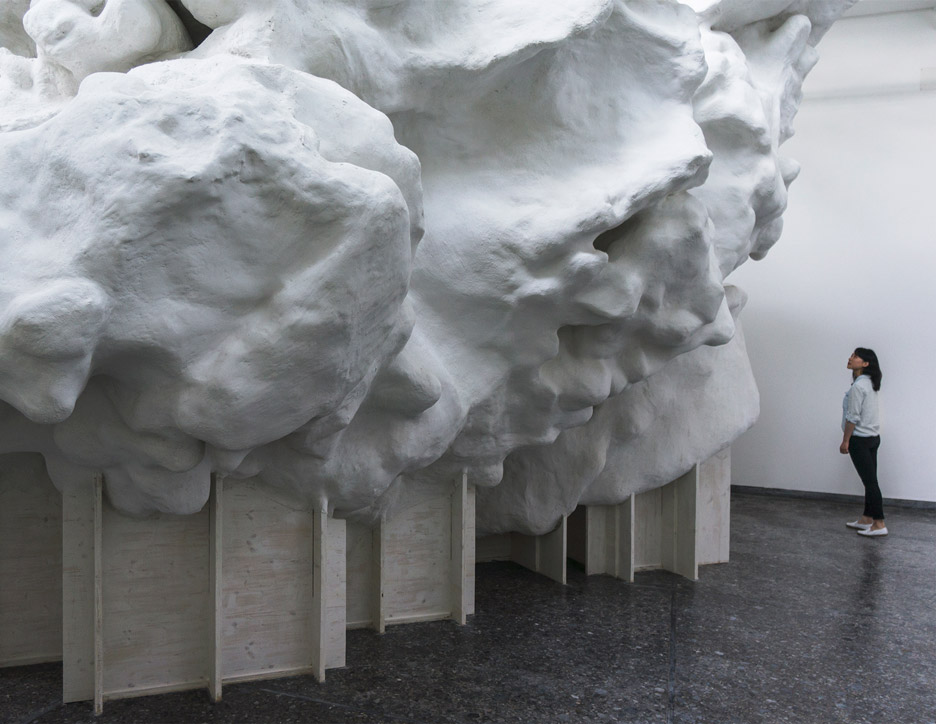
Spanish Pavilion at the 2016 Venice Biennale. Image © Laurian Ghinitoiu
The Golden Lion for Best National Participation went to Spain for UNFINISHED. The jury cited Carlos Quintáns & Iñaqui Carnicero’s “concisely curated selection of emerging architects whose work shows how creativity and commitment can transcend material constraints.”
Here is an article written by the curators of the exhibition and installation on show Iñaqui Carnicero & Carlos Quintáns.
“Spain is one of the countries where the practice of architecture has been most affected by the economic crisis. There are few places on earth where such large numbers of buildings were built in such a short period of time. The lack of reflection over whether these projects were necessary or valid resulted in the subsequent abandonment of many buildings when their completion or maintenance was discovered not to be economically viable. Their appearance throughout Spanish territories has generated a collection of unfinished buildings where the factor of time was eliminated from the formula for making architecture.
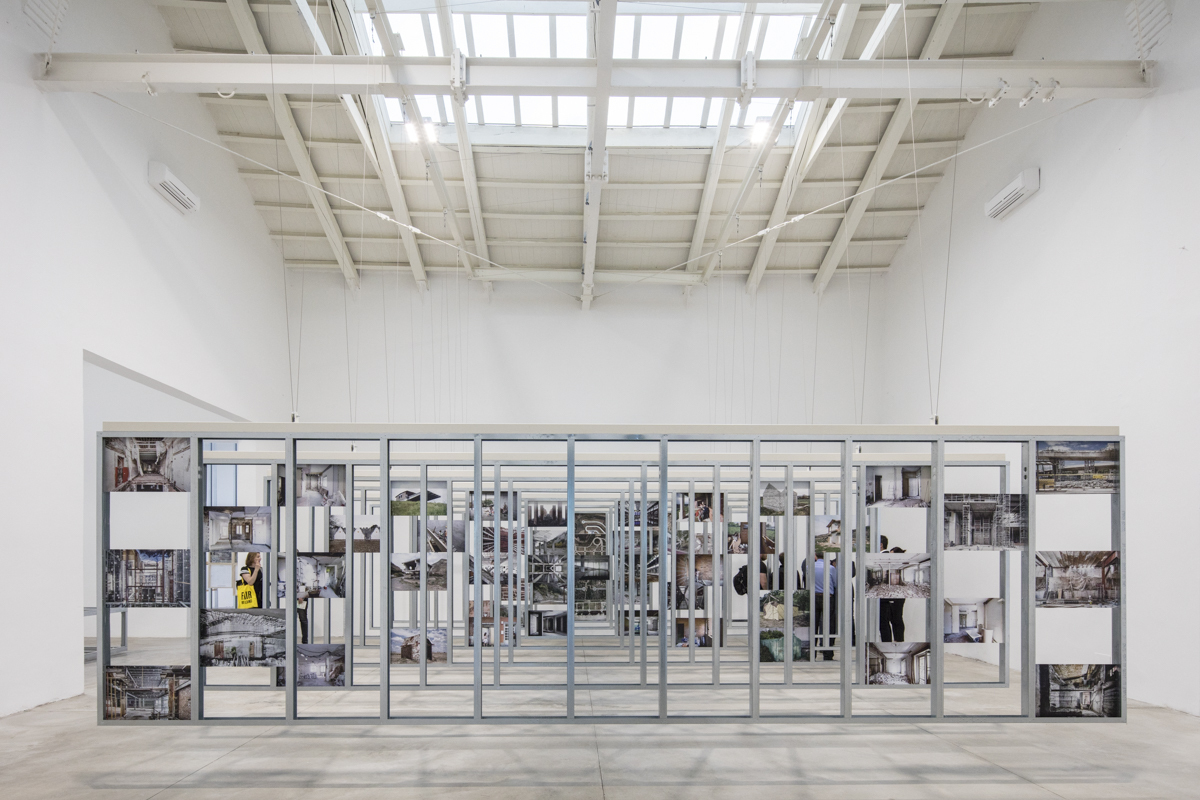
Using photography as a filter to portray this reality, the Pavilion’s central space represents the optimistic view of those who have fought back against this recent past, understanding these inherited constructions as an opportunity.
Spanish Pavilion at the 2016 Venice Biennale. Image © Laurian Ghinitoiu
The “Unfinished” exhibition, presented in the Spanish pavilion at the Biennale, seeks to direct attention to processes more than results in an attempt to discover design strategies generated by an optimistic view of the constructed environment.
The exhibition gathers examples of architecture produced during the past few years, born out of renunciation and economy of mens, designed to evolve and adapt to future necessities and trusting in the beauty conferred by the passage of time. These projects have understood the lessons of the recent past and consider architecture to be something unfinished, in a constant state of evolution and truly in the service of humanity. The current moment of uncertainty in our profession makes its consideration here especially relevant.”
Gabinete de Arquitectura. Image Courtesy of La Biennale di Venezia
The Golden Lion for Best Participant in the International Exhibition, Reporting From the Front, went to Gabinete de Arquitectura. The award was granted to Solano Benítez, Gloria Cabral, and Solanito Benítez (all from Paraguay) for “harnessing simple materials, structural ingenuity and unskilled labour to bring architecture to underserved communities.”
NLÉ’s Makoko Floating School at the 2016 Venice Biennale. Image Courtesy of La Biennale di Venezia
NLÉ received the Silver Lion for a Promising Young Participant in the International Exhibition Reporting From the Front for his Makoko Floating School. The jury cited, “a powerful demonstration, be it in Lagos or in Venice, that architecture, at once iconic and pragmatic, can amplify the importance of education.”
“OUR AMAZON FRONTLINE” / curated by Sandra Barclay and Jean Pierre Crousse. Peruvian Pavilion at the 2016 Venice Biennale. Image Courtesy of La Biennale di Venezia
Japan and Peru took home the Special Mention in the National Participations category. For Japan, the jury particularly appreciated “the poetry of compactness to alternative forms of collective living in a dense urban space.” They congratulated Peru for bringing architecture to a remote corner of the world, making it both a venue for learning as well as a means for preserving the culture of the Amazon.
art of nexus / curated by Yoshiyuki Yamana. Japanese Pavilion at the 2016 Venice Biennale. Image Courtesy of La Biennale di Venezia
Maria Giuseppina Grasso Cannizzo of Italy received Special Mention for her contribution to Reporting From the Front, which demonstrated “perseverance in using the rigours of her discipline to elevate the everyday into timeless works of architecture.”
As it was announced in May, Paulo Mendes da Rocha received the Golden Lion for Lifetime Achievement.
Read more
Look more about the pavilions here